

I’ve just come back from a few days in Brussels at the Strategic Communication Leadership Summit, hosted by Strategic and IABC EMENA.
It was, quite simply, a brilliant few days.
There’s something about being in a room with people who care deeply about the same work you do. Not just the outputs or the tools, but the role communication plays in organisations and in people’s lives. That was everywhere. In the formal sessions, in the side conversations, and in the dinners that went longer than planned.
I caught up with people I haven’t seen in a while. Met others for the first time after knowing them only online. And, as always, left with a few new friendships that I know will continue well beyond the event itself.
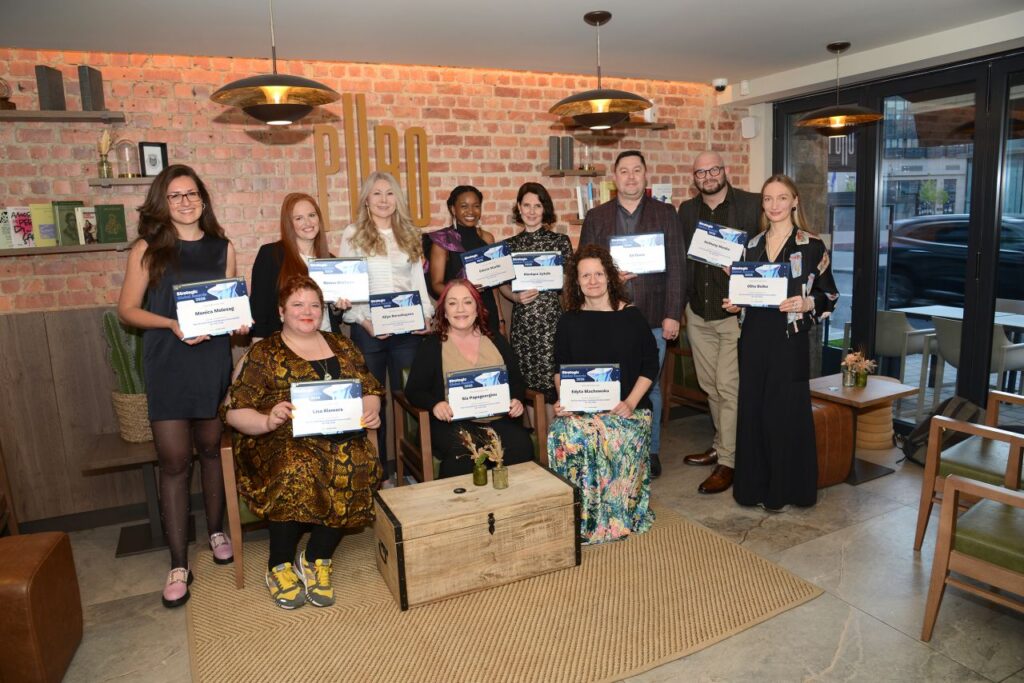
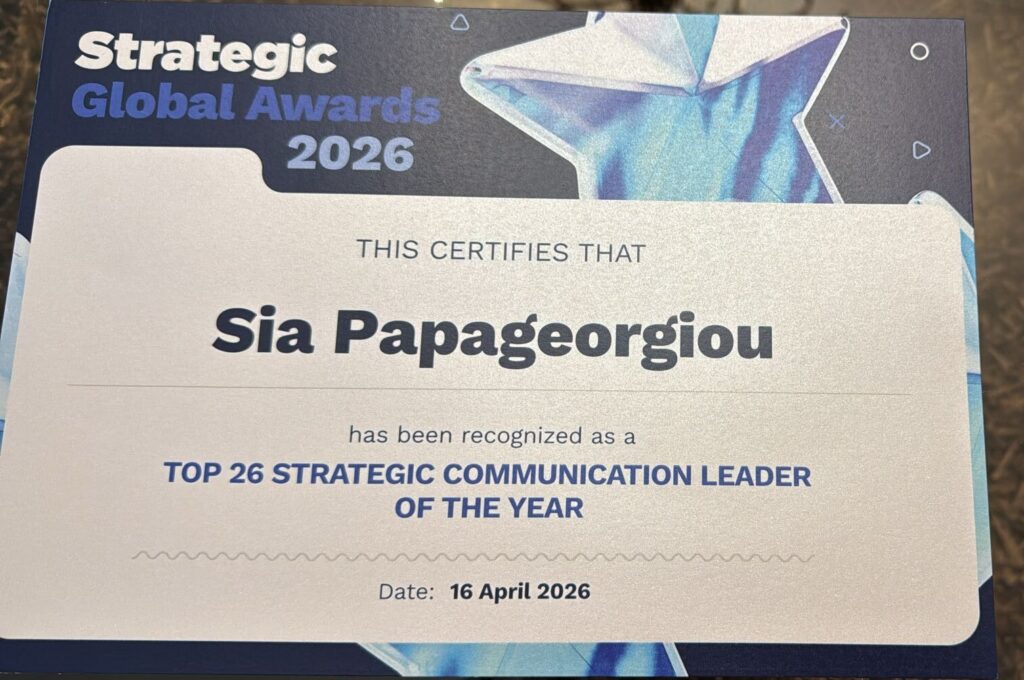
I was also honoured to be named one of the Strategic 26 Communication Leaders of the Year — a recognition I’m genuinely grateful for. Take a look at the full list because it really is a group worth paying attention to.
But what impressed on me the most was the conversations we had.
I facilitated three sessions across the (un)conference, and each one reflected something slightly different about where we are as a profession right now.
Two of them felt like forward momentum. One of them felt more complicated.
Let me start with the energy in the room.
AI is everywhere, but the conversation is maturing. It would have been surprising if AI didn’t come up to be honest.
But the tone of the discussion felt different from what I’ve heard over the past year. There was less fascination with the tools themselves and more focus on what all of this means for our role.
One point came through very clearly. As content becomes easier to create, the expectation of communication professionals changes. Which means our work becomes more considered and more deliberate.
People talked a lot about judgment. About knowing what matters and what doesn’t. About being able to step back from the noise and help others make sense of it.
There was also a strong sense that we shouldn’t be waiting for others to figure this out. There’s a role for us in shaping how AI is used, not just in communication but across the organisation. That includes setting expectations, asking questions about impact and helping people think through what “good” looks like.
AI can do a lot, but it doesn’t know what matters. That’s where we come in.
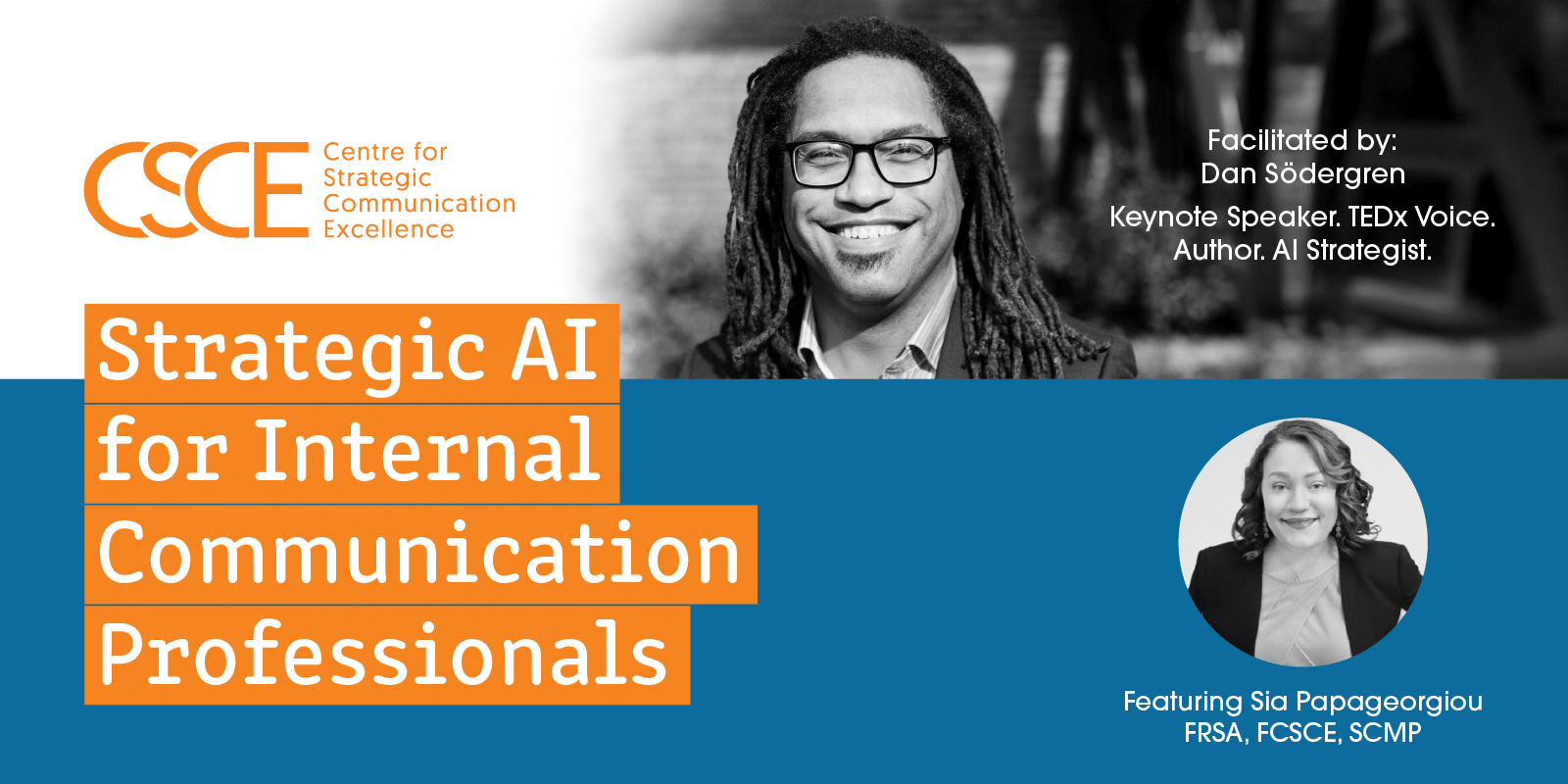
At the Centre for Strategic Communication Excellence, we’re currently leading global research in partnership with Reputation Lighthouse, on behalf of the Global Alliance for Public Relations and Communication Management.
The 2026 edition of our survey moves beyond measuring adoption to examine something more fundamental — whether our profession is genuinely stepping up to lead on responsible AI. We’re exploring governance, accountability, ethical practice, and the reputational stakes that sit at the very heart of what communication professionals do.
The findings will directly inform the Global Alliance’s Guiding Principles for Ethical and Responsible AI and the Responsible Communication Movement. This isn’t research for research’s sake — it’s the evidence base our profession needs to lead with authority and credibility.
What we’re seeing so far lines up with what I heard in Brussels. People are experimenting, they’re engaging, but not always in a way that connects back to the bigger picture.
That gap is where the opportunity sits.
The second session — more honest, more uncomfortable
The second session was always going to be a big one.
The topic, as it was originally framed, was about getting out of the weeds as communication leaders. Letting go of the busy work so there’s space to focus on what really matters and being strategic. It also asked whether we sometimes get in our own way.
Then another layer was added to the conversation — a harder one. That perhaps the reason communication isn’t always included in key decisions is because we don’t always have something meaningful to contribute.
That combination changed the tone of the conversation.
It became less about practical tactics and more about how we see ourselves and how we’re seen by others.
There were of course different views in the room. That’s to be expected and it’s healthy.
What I appreciated was that people spoke honestly and from their own experience. At times, it got a bit tense. That happens when people care.
What I found myself reflecting on afterwards wasn’t any one comment, but the fact that this conversation keeps coming up. Not just in Brussels. Everywhere.
And I don’t think it’s because people don’t understand what it means to be strategic.
The question being asked wasn’t “how do I be strategic?” It was more subtle than that. It was about how to create the conditions to work in a more strategic way. How to move beyond constant delivery. How to make space for thinking, advising and influencing.
That’s a real challenge. But I also think there’s something sitting underneath it.
In the room, there were moments where the conversation moved towards what we need to know, or who we need to be, to be taken seriously at a senior level.
And I found myself quietly questioning that. Because from my experience, it’s not about knowing everything.
It’s about understanding enough. Enough to ask better questions. Enough to connect what’s happening across the organisation. Enough to see patterns, risks, opportunities — and to bring those forward in a way that’s useful.
You don’t need to be the CEO. But you do need to understand what matters to them. That’s different.
There was also a lot of discussion about workload. About being pulled into delivery and the difficulty of stepping back when the work keeps coming. That’s real too.
But the change, when it happens, doesn’t usually come from having more time. It comes from making different choices with the time you already have. What you prioritise, what you push back on, and what you decide not to do.
That’s not easy. It requires confidence and sometimes a willingness to disappoint (and re-educate) people in the short term.
But without that, it’s very hard to move out of the cycle we say we want to move beyond.
I don’t say any of this as a criticism. I say it because I’ve seen how common this tension is and how easy it is to stay in it.
The third session — designing space that actually leads somewhere
The third session brought the conversation back to something more tangible.
We talked about how we create space for people to come together — whether that’s through events, offsites, meetings or communities.
On the surface, this might seem like a simpler topic, but it’s not.
A lot of frustration came through about how often these moments feel good in the room but don’t lead to anything afterwards.
People leave energised…and then nothing really changes.
When you hear that often enough, you start to realise it’s not accidental. It’s about how these moments are designed.
The sessions that people spoke most positively about had a few things in common.
There was a clear purpose. Not just “bringing people together,” but a defined reason for doing so. There were intentional outcomes in mind. And there was follow-through, which included someone taking responsibility for what happened next.
Without those things, it’s very easy for something to feel valuable without actually creating value. And that’s a distinction we need to get better at making.
So where does that leave us?
I left Brussels feeling a mix of things.
Proud of our profession, energised by the people and grateful for the conversations.
And also…still thinking.
We care deeply about what we do. That was clear in every session, every conversation, every moment over those few days.
But there are parts of the conversation we haven’t quite resolved yet.
Sometimes it is about capability. Sometimes it’s about context. And more often than not, it’s a combination of both.
For me, it keeps coming back to something quite simple.
How clearly do we understand the role we play?
And I don’t mean in theory. I mean in practice in our organisations and in the choices we make every day.
Because until that feels clear — to us first — it’s very difficult to expect others to see it.
And until that happens, I suspect we’ll keep finding ourselves in the same conversation.