

There has never been a more important moment for internal communication professionals to step up strategically.
For years, we’ve said we want a seat at the table. We’ve said we want to be seen as advisors not order-takers. We’ve said we want to demonstrate impact not just output.
AI gives us a genuine opportunity to do exactly that. But only if we use it properly.
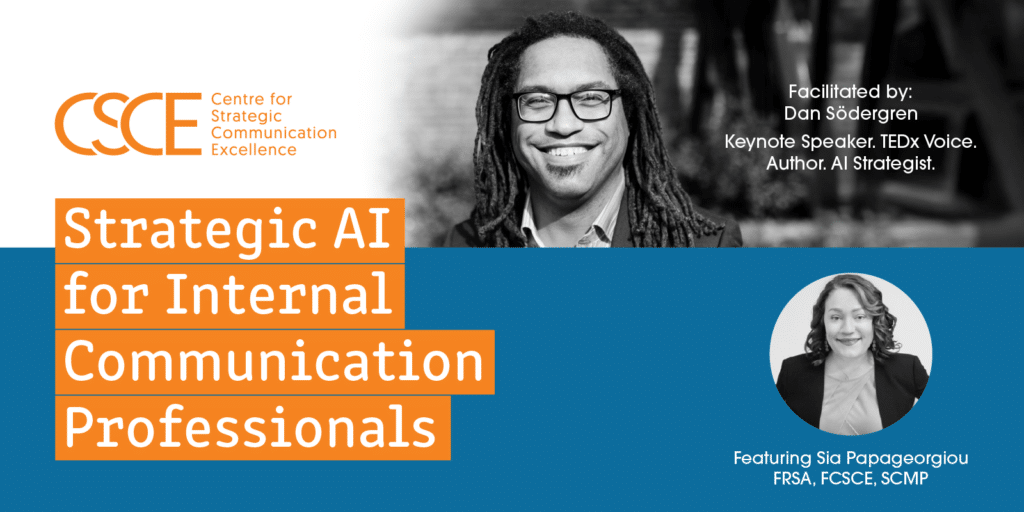
CSCE Learning Opportunity
Strategic AI for Internal Communication Professionals
From faster content to stronger influence
In 2024, the Centre for Strategic Communication Excellence partnered with Haiilo to examine the state of strategic internal communication globally. The findings were clear.
Two-thirds of internal communication professionals (66%) were already using AI tools.
However, most were using AI for drafting content and improving efficiency. Only 8% were using it for strategic planning and framework development.
At the same time, 56% said they spend most of their time developing messages and executing tactics and only 9% are engaged during the decision-making stage of projects.
That should make us stop and think.
If we use AI simply to produce more content, we risk becoming faster tacticians. That does not elevate our profession. It reinforces the perception that our value lies in execution.
The real strategic opportunity
Strategic internal communication is about shaping decisions, influencing outcomes and aligning communication with business goals.
Yet many professionals still struggle with calculating ROI (27%), defining measurable objectives (13%) and gaining leadership buy-in (13%).
Those are strategic capability gaps. And this is where AI can change the game.
For example, imagine your organisation has collected 3,000 open-text comments in an employee listening survey. Instead of manually scanning responses and summarising “general themes,” you use AI to categorise sentiment, identify recurring concerns and extract the language employees are actually using. You then present leadership with clear patterns, risk areas and recommended actions.
That is advisory work.
Or imagine you’re supporting a complex transformation. Rather than reacting to resistance after it surfaces, you use AI to analyse previous change initiatives, identify likely stakeholder concerns and build a proactive communication plan before issues escalate.
That is strategic foresight.
AI can help us:
- Analyse audience data quickly and intelligently
- Test messages before they launch
- Identify risk patterns in feedback
- Connect communication activity to business outcomes
- Turn data into executive-ready insight
It gives us leverage.
But leverage only matters if we choose to use it in planning, decision-making and advisory conversations.
Why strategic AI use really matters (and what other research shows)
We are not the only ones asking these questions. Business research consistently shows that how organisations use AI determines whether they benefit from it.
One study examining the organisational impact of AI found a positive and significant relationship between AI adoption and organisational performance — but crucially, those benefits were strongest when organisations intentionally built AI into meaningful work processes rather than using it only for isolated tasks. In other words, the strategic context in which AI is used mattered at least as much as the tools themselves.
That insight resonates with internal communication work. If AI is relegated to drafting or automating routine tasks, the outcome is efficiency — but not strategic influence. If it is used to deepen insight, enhance decision-making and connect communication to business outcomes, it can contribute to organisational performance in a way that matters to leaders.
We also see support for this idea in communication-focused research. A 2025 study on the impact of AI technologies in organisational communication found that AI-based tools can improve core communication functions — including message delivery, message reception and employee reaction — which in turn influence performance. Importantly, the research suggests that AI’s impact is not limited to efficiency; it can reshape how communication actually works in organisations when applied thoughtfully.
What this means for internal communication professionals is simple but profound: AI can help us do more than just produce work faster. When we direct it toward analysis, foresight and strategic insight —the very activities that leaders value — we strengthen our credibility and deepen the impact of our work.
If we lift the conversation from “How fast can we write this?” to “What decisions does this help the organisation make?” — that is when AI becomes a strategic asset, not just a tactical tool.
Why I’m so excited about this workshop
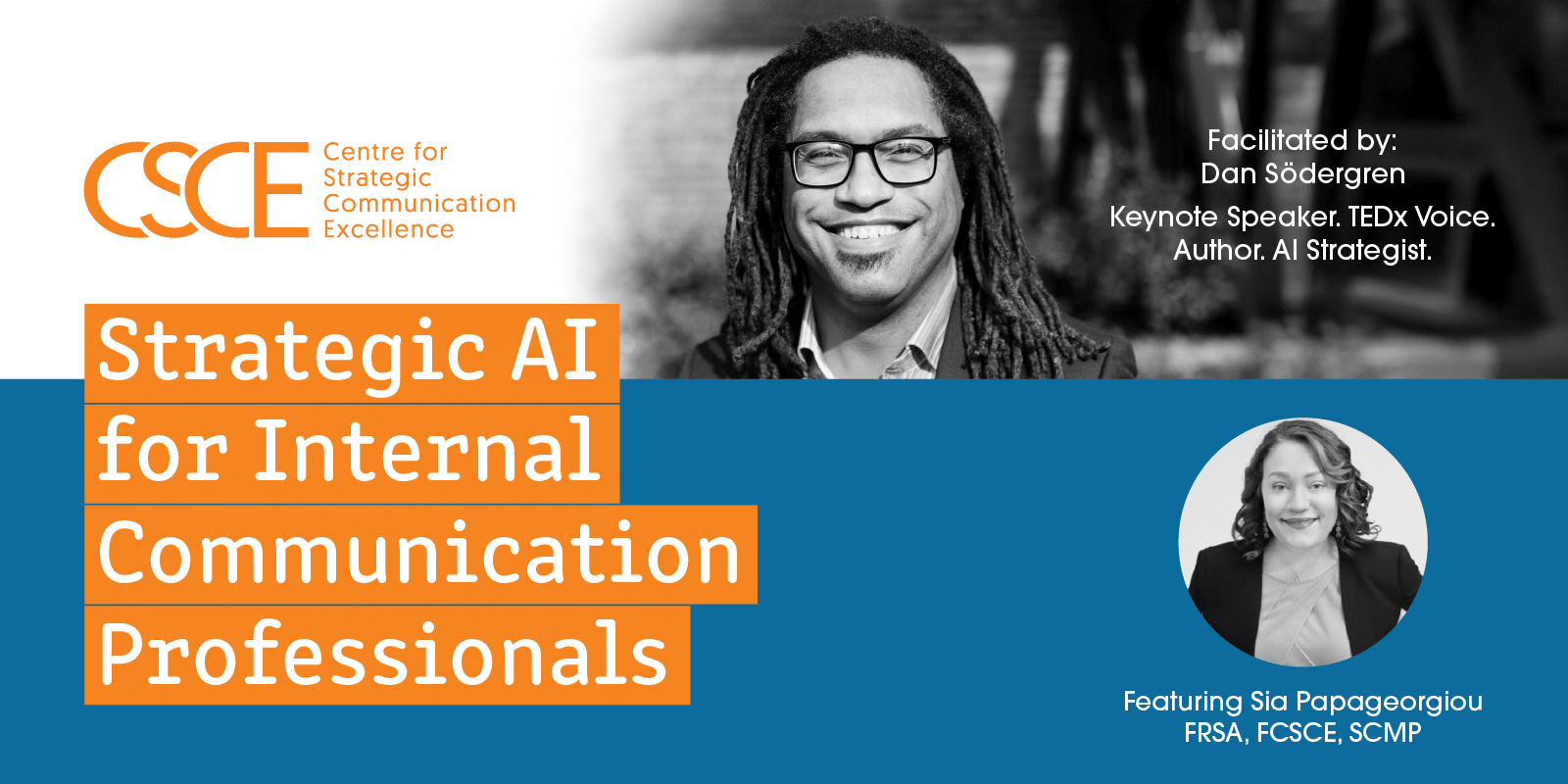
This is exactly why I’m so excited to be partnering with Dan Södergren to deliver Strategic AI for Internal Communication Professionals.
Dan is a futurist, author and media commentator with a passion for helping professionals harness technology to work smarter. He’s a familiar face on UK television — appearing on BBC Breakfast, The One Show, Watchdog and more — where he translates complex tech trends into practical insights for everyday life. He’s also the co-founder of YourFLOCK, an employee feedback platform, and has advised organisations across sectors on digital transformation and the future of work. He brings energy, clarity and practical insight to a topic that too often gets reduced to hype.
This workshop is not about learning how to write better prompts.
It's about learning how to:
- Use AI to strengthen stakeholder analysis
- Design measurable communication strategies
- Build executive-ready business cases
- Anticipate resistance in change communication
- Demonstrate communication ROI with confidence
In other words, how to use AI to elevate your strategic influence not just your efficiency.
We will move beyond “how do I draft this faster?” And into “how do I advise leadership better?”
If you’re serious about playing a more strategic role in your organisation, this workshop will give you practical frameworks and applications you can use immediately.
Secure your spot and build an AI-powered internal communication toolkit that strengthens your credibility at the decision-making table.
We can become known as the people who produce content faster.
Or we can become known as the professionals who help organisations think better, see what’s coming, and make stronger decisions.
AI won’t make that choice for us. We will.
If we use it deliberately, with good judgement and clear intent, we have a real opportunity to strengthen not only our own roles, but how our entire profession is seen.
Now is the time to lead.